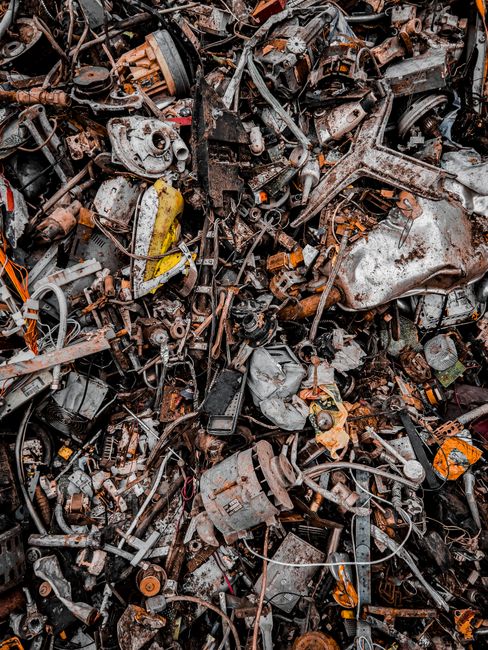
Report abandoned rubbish in Walthamstow: who to contact
Seeing dumped bags, broken furniture, or a fly-tipped mattress on your street is frustrating. It can make a pavement feel untidy, attract pests, and leave everyone wondering who is supposed to deal with it. If you need to report abandoned rubbish in Walthamstow, the key question is simple: who to contact, what to say, and how to make sure the report is taken seriously.
This guide walks you through the practical side of the process in plain English. You will learn what counts as abandoned rubbish, why reporting it matters, how the usual reporting process works, and what details help the issue get picked up faster. We will also cover common mistakes, best-practice steps, and a realistic checklist you can use straight away. No fluff. Just the stuff that helps.
If you are dealing with a business premises, an office move, or a recurring dumping problem, it is also worth understanding the wider waste removal picture. You can see how the company approaches responsible disposal through its recycling and sustainability approach, and if you need to speak directly to a local team, the contact page is the most direct route.
Table of Contents
- Why reporting abandoned rubbish matters
- How the reporting process works
- Key benefits and practical advantages
- Who this is for and when it makes sense
- Step-by-step guidance
- Expert tips for better results
- Common mistakes to avoid
- Tools, resources and recommendations
- Law, compliance, standards and best practice
- Options and method comparison
- Case study or real-world example
- Practical checklist
- Conclusion
- Frequently asked questions
Why Report abandoned rubbish in Walthamstow: who to contact Matters
Abandoned rubbish is more than an eyesore. A couple of black bags on a quiet corner can quickly turn into a larger dumping point if nobody acts. That is usually how it goes, annoyingly. One item becomes three, then a sofa, then a trail of debris left after a late-night drop-off.
Reporting it promptly helps reduce that domino effect. It also makes it easier for the right team to assess whether the rubbish is general litter, dumped household waste, builder's waste, or a more serious fly-tipping issue. Those are not all handled in exactly the same way, so giving the right information matters.
There is also a safety angle. Sharp objects, broken glass, needles, leaking liquids, and blocked access routes can create real hazards for pedestrians, children, cyclists, and anyone with mobility issues. A pile of rubbish near a busy pavement can feel harmless at first glance, but in practice it can become a small mess with a big knock-on effect.
Practical takeaway: if the rubbish looks dumped rather than simply misplaced, report it as soon as possible and include clear location details. Fast, specific reports tend to be more useful than vague complaints.
For local households, landlords, letting agents, shop owners, and office managers, this matters because the appearance of the surrounding street affects everyday life. A tidy environment feels calmer. A neglected one gets under your skin. Truth be told, nobody wants to start the morning stepping around a torn bin bag in the drizzle.
How Report abandoned rubbish in Walthamstow: who to contact Works
The basic process is straightforward. You identify the rubbish, note the location, decide whether it is an immediate hazard, and then contact the relevant local reporting route. In many cases, the report is passed to the team responsible for public land or environmental enforcement. If the rubbish is on private land, a different person may need to act.
That distinction matters more than people expect. A pile of waste in a communal alley, for example, may involve a landlord or managing agent. Waste left on a pavement or road edge is usually a public-space issue. If you are not sure which category it falls into, do not worry too much. A clear description still helps whoever receives the report.
Here is the general flow people usually follow:
- Check whether the rubbish is in a dangerous position or blocking access.
- Take a clear note of the exact spot, nearby landmarks, and what has been dumped.
- Gather a photo or two if it is safe to do so.
- Report it to the appropriate local contact or online reporting route.
- Keep a record of the time, date, and any reference number you are given.
Sometimes people ask whether they should move the rubbish themselves. Usually, no. It sounds helpful, but it can be messy, unsafe, or simply not your responsibility. If the waste includes sharp items, liquids, or heavy objects, leave it well alone and report it instead.
In a business context, especially after an office clearance or refit, you may also want to speak to a specialist team about removing bulky waste properly. The company's about us page gives a better sense of how it works in practice, while pricing and quotes can help if you are comparing options before booking a collection.
Key Benefits and Practical Advantages
Reporting abandoned rubbish quickly is one of those small actions that pays off in a few different ways. Nothing dramatic, just useful. And sometimes useful is exactly what you need.
- Cleaner streets: dumped waste is removed sooner, so the area looks and feels better.
- Reduced pest risk: food waste and bags left outside can attract rodents and gulls.
- Lower safety risk: broken furniture, glass, and sharp waste are dealt with before someone gets hurt.
- Better neighbour relations: small issues become less likely to turn into "who was supposed to sort that?" arguments.
- Useful evidence trail: a logged report can help if a repeat dumping spot needs monitoring.
There is another benefit that often gets missed: reporting helps build a clearer picture of repeat dumping patterns. If the same alley, cut-through, or loading bay keeps getting hit, that pattern can inform better prevention. Sometimes the fix is better bins. Sometimes it is lighting, signage, access control, or more regular clearances. It is rarely one magic answer.
For organisations with a duty to keep premises tidy and safe, using a compliant waste contractor can also reduce the chance of waste being left out in the wrong place. The company's health and safety policy and insurance and safety information are worth reading if you want reassurance about responsible handling.
Who This Is For and When It Makes Sense
This guide is for anyone in Walthamstow who has spotted rubbish that should not be there. That includes residents, tenants, landlords, housing managers, shopkeepers, office staff, caretakers, and anyone who walks past the same dumped pile twice a day and finally thinks, "Right, enough now."
It makes sense to report abandoned rubbish when:
- it is clearly dumped rather than waiting to be collected;
- it has been sitting there for more than a short while;
- it is in a place where it could cause obstruction or danger;
- you suspect repeated fly-tipping at the same spot;
- it includes bulky items such as furniture, mattresses, or bags of mixed waste;
- there is a smell, leakage, or visible sign of contamination.
If you are responsible for a building, you may need to act even if the rubbish is not technically on your own frontage. For example, a landlord overseeing a shared passageway or a business managing bins behind a shop may need to organise clearance quickly. In those cases, waiting often makes the job bigger and more awkward. A few hours can matter.
There are also situations where a formal complaint or follow-up is appropriate. If you have already reported the problem and nothing has changed, or if the area keeps being used as a dumping spot, it may be worth keeping a paper trail. The company's complaints procedure is relevant if you are dealing with a service issue or need to escalate a concern about a booked clearance.
Step-by-Step Guidance
If you want the cleanest, fastest route through the process, follow these steps. It sounds basic, but basic done well is usually what gets results.
1. Look at the type of waste
Is it a single bag, household rubbish, building debris, or bulky waste? A single loose bag may be handled differently from a pile of broken cupboards and tiles. Make a quick mental note, because that first impression helps shape the report.
2. Check whether it is urgent
If the rubbish is blocking a path, leaking, smoking, or contains hazardous material, treat it as urgent. Do not wait for the perfect photo or a polished description. Safety comes first.
3. Capture the location clearly
Write down the street name, nearest house number, alleyway, landmark, or shop frontage. If you can describe the exact position in plain English, do it. "By the recycling bay behind the parade of shops" is often more helpful than "near the corner somewhere."
4. Take a photo if it is safe
Photos can help show scale and type of waste. Keep them simple. One wide shot and one closer image are usually enough. You are not producing a documentary, after all.
5. Submit the report to the right contact
Use the local reporting route for public-space dumping, or contact the responsible property owner, managing agent, or business if it is on private land. If you need to speak to a team about related clearance or disposal work, the contact us page is the obvious starting point.
6. Keep the details
Make a note of the date, time, description, and any reference number. If the issue repeats, this record becomes surprisingly valuable.
7. Follow up if needed
If nothing changes after a reasonable time or the rubbish comes back, follow up. Repeat problems often need repeat attention. That is just the reality of it.
Expert Tips for Better Results
Small details make a big difference. In our experience, the best reports are the ones that are easy to action without the recipient having to guess what happened.
- Be specific about the waste: "two black bags and a broken chair" is better than "some rubbish."
- Give a fixed location: include nearby properties, lamp posts, bins, or numbered entrances.
- Say whether it is a repeat spot: that helps distinguish one-off dumping from a recurring problem.
- Use calm, factual wording: it keeps the report clear and avoids confusion.
- Separate public and private land in your head: it saves time later.
Here is a useful little trick: if you know the rubbish appeared overnight, mention that. If it has been growing for days, say so. Timing can matter more than people think, because it helps identify when the dumping tends to happen. Early morning? Late evening? Somewhere between the school run and the next bin collection? Little clues like that are not glamorous, but they help.
Also, if you manage a property or business, it is smart to think ahead about waste prevention. Proper storage, secure bins, and scheduled clearances are boring in the best possible way. They reduce the odds of a pile building up near your frontage and make the whole area look looked-after.
For wider company background, you can also review the recycling and sustainability page to see how responsible disposal is approached, and the terms and conditions if you want to understand the service framework more clearly.
Common Mistakes to Avoid
Most reporting problems come down to avoidable little things. Nothing fancy, just small missteps that make a straightforward issue harder than it needs to be.
- Giving a vague location: "near mine" is not enough.
- Waiting too long: a delay can allow the rubbish to spread or attract more dumping.
- Assuming someone else already reported it: if you care about the outcome, it is safer to log it yourself.
- Moving hazardous waste: don't touch sharp, heavy, or suspicious items.
- Using the wrong contact route: private land and public land are not the same thing.
- Forgetting follow-up details: without a note or reference, repeat reports become harder to track.
Another common mistake is treating all rubbish the same. A tipped bin bag is annoying. A dumped mattress with broken springs is a different level of problem. A load of builder's waste, meanwhile, may need stronger intervention because it suggests someone has disposed of material improperly rather than simply dropped a household bag.
And yes, it is tempting to think, "I'll do it later, after tea." Fair enough. But if it is on a busy route or near your shop entrance, later can turn into tomorrow, and tomorrow into a new pile. Nobody enjoys that little cycle.
Tools, Resources and Recommendations
You do not need a complex toolkit to report abandoned rubbish well. A phone, a note app, and a bit of patience are usually enough. Still, a few practical habits can make the process smoother.
| Tool or resource | What it helps with | Best use case |
|---|---|---|
| Smartphone camera | Recording the rubbish clearly | Quick photo evidence before reporting |
| Notes app | Keeping dates, times, and reference numbers | Repeat dumping or follow-up tracking |
| Street or building landmarks | Pinpointing the exact location | Alleyways, rear entrances, and shared access areas |
| Local service contact | Getting the issue into the right hands | Public-space rubbish or related clearance support |
| Safety and policy pages | Understanding standards and responsibilities | Businesses, landlords, and repeat service users |
If you are comparing local providers for an office or commercial clearance after a dumping issue, the pricing and quotes page is useful for the first conversation. If you want to understand payment handling, the payment and security page adds extra reassurance. It is not the most exciting reading, granted, but it does build trust.
For more background on the business itself, the about us page and accessibility statement can be helpful if you want to know how the site and service are presented to different users.
Law, Compliance, Standards, or Best Practice
Abandoned rubbish and fly-tipping are not just tidy-up problems. They sit within wider expectations around waste duty of care, safe handling, and responsible disposal. You do not need to become a compliance expert to make a report, but it helps to understand the basics.
In UK practice, waste should be collected, stored, transported, and disposed of responsibly. For businesses, that usually means choosing a contractor that handles waste lawfully and can explain what happens to the material after collection. For householders, it means not leaving items out in a way that creates a public nuisance or safety risk.
Best practice usually looks like this:
- report dumped waste promptly;
- avoid touching potentially hazardous items;
- keep access routes clear where possible;
- use reputable disposal or clearance services for bulky waste;
- retain simple records for repeat incidents;
- escalate recurring issues through the proper channels.
For business users, there is also a practical duty to keep premises clean and manageable. If you are clearing an office, shop, or storage space, using a company with visible policy information is a sensible sign. The insurance and safety page, the health and safety policy, and the modern slavery statement all contribute to that trust picture. Yes, that last one may seem far removed from a dumped sofa, but good compliance tends to travel together. One reliable sign often points to others.
Options, Methods, or Comparison Table
Different situations call for different actions. If you are trying to work out the quickest path, this comparison may help.
| Option | Best for | Pros | Limitations |
|---|---|---|---|
| Report to the relevant local contact | Rubbish in public spaces | Fast, appropriate, and usually the first step | May require clear location details |
| Contact landlord or managing agent | Private land or communal access areas | Reaches the person with direct responsibility | May take time if ownership is unclear |
| Arrange a professional clearance | Bulky, recurring, or business waste | Efficient, tidy, and practical for larger jobs | Needs booking and may involve cost |
| Escalate a repeat issue | Persistent dumping hotspots | Useful for ongoing problems and follow-up | May not produce instant results |
If your main issue is simply one dumped item, reporting is usually enough. If the rubbish is yours, or from your property, a quick removal booking may make more sense. If the same spot keeps getting hit, a report plus a prevention plan is better. You can also speak to the team directly through the contact us page if you need practical guidance on clearance options.
Case Study or Real-World Example
Picture a side street in Walthamstow on a grey Monday morning. Two bin bags are sitting beside a wall, then a broken cabinet appears a few days later. By Friday, there is a worn chair, some cardboard, and a few spilled contents blowing across the pavement whenever a bus goes past. Nothing dramatic, but enough to be irritating every time you walk by.
A resident reports the location with a clear description, a photo, and the nearest landmark. Because the report is specific, it is easier to log and route correctly. A shop owner nearby also notes that the same area has become a repeat dumping spot, which helps build the case that the issue is ongoing rather than a one-off.
In a business setting, the fix might also include a scheduled clearance for nearby bulky waste or a review of bin storage. That is where a local specialist can help. The point is not to overcomplicate it. The point is to stop the mess from becoming normal. That little shift matters more than it sounds.
We have seen plenty of jobs where the difference between a tidy street and a messy one was simply timely reporting plus a sensible follow-up. Not glamorous, but effective. And honestly, effective is what most people want.
Practical Checklist
Use this quick checklist before you report abandoned rubbish in Walthamstow:
- Have I confirmed the rubbish looks dumped rather than temporarily placed?
- Do I know the exact location, including a landmark or property number?
- Have I noted what type of waste it is?
- Is there any obvious danger, smell, leakage, or obstruction?
- Do I have a photo if it is safe to take one?
- Have I identified whether the land is public or private?
- Have I kept the date and time of the sighting?
- Do I know who needs to receive the report?
- Should I follow up if there is no response?
- If it is my property or business, do I need a professional clearance as well?
One line of advice here: do the boring detail properly. It saves more time than it takes.
Get a free quote today and see how much you can save.
Conclusion
If you need to report abandoned rubbish in Walthamstow, the best approach is simple: identify the waste, capture the location clearly, contact the right person or team, and keep a record. That is usually enough to move things in the right direction.
And if the problem is bigger than a single report - say a recurring dumping point, a bulky clearance, or waste linked to a property you manage - it may be worth taking the next step and arranging proper removal. A clean street is better for everyone. It just is. The smell, the clutter, the hassle ... none of it needs to linger longer than it has to.
Clear information, calm reporting, and a sensible follow-up are often all it takes. Small action, decent result. Not bad at all.
Frequently Asked Questions
Who should I contact to report abandoned rubbish in Walthamstow?
Start with the local reporting route for rubbish in public spaces. If the waste is on private land, contact the landlord, managing agent, or property owner instead. If you need help with related clearance, the site's contact us page is the best place to begin.
What details should I include when I report it?
Give the exact location, a short description of the waste, the date and time you saw it, and a photo if safe. The more specific you are, the easier it is to act.
Is abandoned rubbish the same as fly-tipping?
Not always, though the terms are often used loosely. Fly-tipping usually means waste dumped illegally, often in bulk or in a place it should not be. Abandoned rubbish can include anything left behind without proper collection.
Should I move the rubbish myself?
Usually not, especially if it is heavy, sharp, or possibly contaminated. Reporting it is safer, and in many cases more appropriate.
What if the rubbish is on my property?
If it is on your land or in a communal area you manage, you may need to arrange removal yourself. A professional clearance service may be the quickest route for larger or recurring waste.
How long does it take to get removed?
That depends on the type of rubbish, where it is, and who is responsible for dealing with it. Urgent hazards are generally more likely to be prioritised than routine dumping.
Can I report rubbish that keeps coming back in the same spot?
Yes, and you should. Repeat dumping points are worth logging carefully because the pattern itself is useful information.
Do I need photos to make a report?
Photos are helpful, but they are not always essential. If it is unsafe or awkward to take one, a clear written description is still worth submitting.
What kind of waste is most urgent to report?
Anything that blocks access, leaks liquid, smells strongly, contains sharp objects, or appears hazardous should be reported quickly.
Can a business use the same process as a resident?
In principle, yes for public-space dumping. But businesses often also need to think about their own waste duty, storage, and clearance arrangements, especially if the rubbish is linked to their premises.
What if I'm not sure whether it's public or private land?
Report it with the best location details you have. If you can mention nearby property names or access points, that usually helps the recipient work out who is responsible.
Where can I learn more about the company before booking clearance?
You can review the about us page for background, the recycling and sustainability page for disposal values, and the terms and conditions for service details.
What if I need an accessible or privacy-related page before getting in touch?
Useful support pages are available if you want them: the accessibility statement and privacy policy explain how the website handles those areas.
Can I get help with a commercial clearance after reporting rubbish?
Yes. If the waste is part of a bigger office, retail, or premises clearance, a dedicated service may be the sensible next step. Start with the pricing and quotes page if you want to compare options first.